Last Updated: 2026-05-30
More than 12,000 Americans have renounced citizenship since 2020, with tens of thousands more relocating abroad while maintaining US citizenship. Most discover too late that closing a US bank account from abroad is significantly harder than opening one—and maintaining active accounts without a domestic address creates compliance challenges that can freeze assets mid-transition.
The regulatory landscape for Americans living abroad shifted dramatically in 2014 when FATCA (Foreign Account Tax Compliance Act) created new compliance burdens for financial institutions. Banks now face substantial penalties for improperly handling expat accounts, leading many to restrict services for non-resident Americans rather than navigate complex international reporting requirements.
Strategic financial account management preserves banking access, maintains credit history, avoids tax complications, and ensures you can return to the US financial system if plans change. The decisions you make before departure determine your financial flexibility for years to come.
Find Your Ideal Country in 2 Minutes
Answer a few questions and get personalized country matches based on your budget, visa eligibility, and lifestyle.
Start the Free Quiz →Ready to plan your financial transition abroad? Take our free relocation assessment to get a personalized timeline for managing your US accounts during international relocation. Start Your Assessment
The FATCA Problem: Why US Banks Are Closing Expat Accounts

The Foreign Account Tax Compliance Act fundamentally changed how US financial institutions handle expat clients. Banks must report accounts held by US citizens living abroad and verify compliance with complex international tax reporting requirements. Rather than invest in specialized expat banking infrastructure, many institutions have chosen to exit the market entirely.
HSBC closed its US retail banking division in 2021, citing compliance costs that exceeded revenue from expat accounts. Citibank followed suit in 2022, terminating most international retail banking services. Even regional banks that previously welcomed expat clients now require extensive documentation and often close accounts when customers change their address to a foreign country.
The compliance burden extends beyond simple reporting. Banks must verify tax residency status, monitor large transfers that might trigger money laundering alerts, and maintain documentation for customers they may never see in person again. For accounts under $50,000, these costs often exceed the profit margin, making expat banking financially unviable for many institutions.
Which Banks Still Serve Expats
Charles Schwab Bank remains one of the most expat-friendly options, with explicit policies allowing international account holders and no foreign transaction fees. Bank of America maintains accounts for existing customers who relocate but rarely accepts new international applicants. Credit unions, particularly those affiliated with military or federal employees, often have more flexible international policies due to their membership-based structure.
State Department Federal Credit Union and Pentagon Federal Credit Union both maintain robust international banking services, though membership requirements may limit accessibility. Some regional banks in states with high expat populations—Florida, California, Texas—have developed specialized international banking teams, but account minimums are typically higher than domestic requirements.
Country-Specific Brokerage Rules: Where You Can Keep Your Accounts

Brokerage account compatibility varies significantly by destination country, with regulatory agreements between the US and your new home country determining access. The differences can be stark: Americans in Mexico generally maintain full access to US brokerages, while those in Thailand face significant restrictions.
Europe (Portugal, Spain, Ireland): MiFID II regulations complicate US brokerage access for EU residents. Fidelity and Vanguard typically require account closure within 12 months of establishing EU tax residency. Charles Schwab International maintains limited services for Americans in Portugal and Spain through their UK entity, but with restricted investment options. Interactive Brokers offers the most comprehensive EU coverage, with dedicated European platforms that allow continued trading.
Asia (Thailand, Philippines, Malaysia): Most major US brokerages maintain full service for Americans in these countries, as bilateral tax treaties facilitate account maintenance. Schwab, Fidelity, and Vanguard all allow account continuation with proper address updates and tax documentation. E*Trade has specific restrictions in the Philippines but maintains service elsewhere in the region.
Latin America (Mexico, Costa Rica, Panama): Generally the most permissive region for US brokerage accounts. All major platforms continue service with minimal restrictions. Mexico's proximity and extensive financial integration with the US means virtually no service interruption. Costa Rica and Panama, as dollarized economies, create fewer compliance complications for US brokerages.
Account Transfer Options
When brokerages require closure, in-kind transfers to compatible institutions can preserve investment positions without triggering tax events. Interactive Brokers accepts transfers from most US brokerages for American expats, maintaining original purchase dates for tax calculations. Schwab International can receive transfers for Americans in compatible countries, though investment options may be limited compared to domestic accounts.
The transfer process typically takes 6-8 weeks and requires extensive documentation, including proof of foreign residence, tax identification numbers from both countries, and attestation of continued US tax filing obligations. Initiating transfers before establishing foreign tax residency can simplify the process significantly.
Credit Cards Abroad: Preserving Your Credit Score
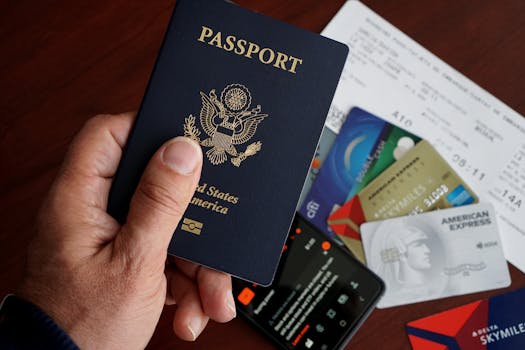
Closing credit cards before international relocation is one of the most damaging financial mistakes Americans make. Credit scores depend heavily on account age and credit utilization ratios—factors that deteriorate rapidly when accounts close. A 15-year-old credit card with a $10,000 limit represents substantial credit history that can't be rebuilt quickly upon return to the US.
The average American credit card account age contributes 15% to credit score calculations. Closing cards resets this clock to zero, while maintaining cards preserves the aging benefit indefinitely. Americans who closed all cards before relocating and returned to the US after five years typically saw credit scores drop 80-120 points, requiring 2-3 years to rebuild.
International Credit Card Management
Most major credit card issuers allow international use with proper notification, though policies vary significantly. Chase requires US addresses for billing but accepts international phone numbers for contact. American Express has the most restrictive international policies, often closing accounts for customers who can't verify US residence within 12 months.
Capital One and Bank of America offer more flexible international policies, particularly for customers with long account histories. Discover has limited international acceptance but maintains accounts for expats without difficulty. The key is maintaining a US address—either through family, friends, or mail forwarding services—and ensuring automatic payments continue from US bank accounts.
Foreign transaction fees become a significant consideration for daily use abroad. Cards with no foreign transaction fees—Charles Schwab Debit, Capital One Venture, Chase Sapphire—should be prioritized for active use. Keep one or two US cards active for credit history purposes, even if foreign transaction fees make them impractical for daily spending.
Tax Residency vs Physical Location: The Critical Distinction

Many Americans assume that moving abroad automatically changes their tax residency status, but this is incorrect. US citizens remain subject to US tax obligations regardless of physical location, and tax residency in your new country is typically a separate determination based on time spent, visa status, and local tax elections.
This distinction matters enormously for financial account management. Banks care about tax residency status, not just physical address. An American in Portugal on a D7 visa may remain a US tax resident for 1-3 years, depending on how quickly they establish Portuguese tax residency. During this period, US financial institutions often maintain normal account services with fewer restrictions.
Establishing Foreign Tax Residency
Most countries use the 183-day rule as a starting point for tax residency, but additional factors include visa type, property ownership, employment status, and formal tax residency elections. Spain allows Americans to delay tax residency establishment for up to five years under certain circumstances, while Thailand considers visa type and formal registration with tax authorities.
Portugal's D7 visa holders can choose when to establish tax residency, often waiting until the second year to optimize tax planning. This flexibility preserves US financial account access longer and allows more time to establish Portuguese banking relationships before transitioning away from US institutions.
The Foreign Earned Income Exclusion (Form 2555) requires US tax filing regardless of foreign tax residency status, but it can reduce US tax obligations while maintaining compliance. This is particularly important for Americans relocating internationally, as many assume expatriation automatically eliminates US tax obligations.
Get personalized guidance for your financial transition. Our Explorer plan provides country-specific banking guides, brokerage compatibility charts, and month-by-month financial timelines for $5/month. Explore Our Resources
Strategic Sequencing: Your Pre-Departure Financial Timeline

Proper timing of financial account changes can prevent lockouts and preserve maximum flexibility. The sequence matters more than speed—rushing account closures before establishing foreign banking relationships can leave you financially stranded during transition.
12 Months Before Departure: Research banking options in your destination country and begin establishing relationships if possible. Many international banks offer account opening services for non-residents, though minimum deposits may be higher. Document all US account terms and restrictions to understand which institutions allow international addresses.
6 Months Before: Notify credit card companies of upcoming international move and confirm policies for address changes. Update contact information to include international phone numbers while maintaining US addresses. Begin establishing address forwarding services through family, friends, or commercial providers.
3 Months Before: Complete brokerage account research and initiate any necessary transfers to expat-compatible institutions. This timing allows completion before foreign tax residency establishment complicates the process. Establish power of attorney arrangements with trusted US-based family or advisors if needed.
1 Month Before: Update addresses with financial institutions that allow international addresses. Ensure automatic payments are established for all accounts you're maintaining. Download and archive all account documentation, as accessing historical records from abroad can be challenging.
After Arrival: Wait at least 90 days before closing any US accounts to ensure foreign banking relationships are fully functional. Many expats encounter unexpected challenges with foreign banks that make US account access temporarily necessary.
Documentation Requirements
Financial institutions typically require specific documentation for expat account management: proof of foreign address (utility bills, lease agreements), visa documentation showing legal residence status, and sometimes letters from foreign banks confirming account establishment. IRS letters confirming tax filing compliance may be required for some brokerage accounts.
Keep physical copies of all documentation, as many foreign countries have limited notarization or document authentication services. US Embassy services can authenticate documents but often with significant delays and fees.
Fallback Plans: When US Banks Say No

Despite careful planning, some Americans find their US banks terminate accounts shortly after international relocation. Having backup plans prevents financial disruption and maintains access to the US financial system.
Alternative Banking Solutions
Wise (formerly TransferWise) offers multi-currency accounts with US account numbers that can receive direct deposits and wire transfers. While not a full-service bank, Wise accounts can maintain US financial system connectivity when traditional banks close expat accounts. Monthly fees are minimal, and currency conversion rates are highly competitive.
Mercury offers business banking services that may be accessible to Americans abroad engaged in consulting or freelance work. Their international policies are more flexible than traditional banks, though personal banking options are limited.
Charles Schwab Bank specifically markets to expats and has robust international banking services. Opening a Schwab account before departure can provide backup access even if primary banking relationships fail. Their investor checking account has no foreign transaction fees and worldwide ATM fee reimbursement.
Brokerage Alternatives
Interactive Brokers maintains the most comprehensive international presence for American expats, with regulated entities in Europe, Asia, and the Americas. When US-based brokerages require account closure, IBKR can often accept transfers while maintaining investment positions.
For Americans unable to maintain US brokerage accounts, foreign brokerages in domiciled countries may offer US market access. Portuguese banks like Banco Invest and Spanish institutions like Renta 4 provide US stock trading for resident Americans, though fees are typically higher than US-based services.
Power of Attorney Arrangements
Trusted US-based family members or financial advisors can maintain certain account functions on behalf of expat Americans. Limited power of attorney for financial accounts allows account maintenance, bill payment, and some investment management while preserving the American's direct ownership.
This arrangement works best for credit cards and simple banking relationships. Brokerage accounts may have restrictions on power of attorney trading, and some institutions require annual renewals of authorization documents.
Managing Credit Card Expiry and Renewal
Credit cards have expiration dates typically 2-4 years from issuance, and managing renewal from abroad requires advance planning. Cards that expire without renewal can damage credit scores and eliminate emergency access to US credit.
Most credit card companies will mail renewed cards to US addresses only, making mail forwarding services essential for expats. Commercial mail forwarding typically costs $10-20 monthly but preserves access to card renewals, bank communications, and tax documents. Family-based mail forwarding is less expensive but requires reliable relatives willing to manage forwarding logistics.
Expedited Delivery Options
When renewed cards must reach expats quickly, most issuers offer expedited international shipping for $25-50. American Express and Chase both provide emergency card replacement services to international addresses, though processing time can be 5-10 business days versus overnight domestic delivery.
Some expats schedule US visits to coincide with card renewal periods, ensuring physical presence for card receipt and activation. This strategy works well for Americans maintaining vacation homes or regular family visits but isn't practical for permanent international relocations.
The Tax Implications of Account Management
Financial account decisions have significant tax consequences for Americans abroad. Closing investment accounts may trigger capital gains taxes, while maintaining accounts requires annual reporting of foreign financial interests through FBAR (Foreign Bank Account Report) and potentially Form 8938.
The Foreign Bank Account Report threshold is $10,000 in aggregate foreign account balances at any point during the tax year. Americans with foreign accounts exceeding this threshold must file FinCEN Form 114 annually. Penalties for non-compliance can exceed account balances, making proper reporting essential.
Form 8938 (Statement of Specified Foreign Financial Assets) has higher thresholds—$50,000 for single expats, $100,000 for married couples—but broader asset categories. Investment accounts, insurance policies with cash value, and foreign pension contributions may all trigger reporting requirements.
Double Taxation Treaties
Most countries where Americans relocate have tax treaties with the US designed to prevent double taxation. However, these treaties don't eliminate US tax filing requirements and may create additional reporting obligations. Americans relocating internationally should understand that expatriation doesn't automatically eliminate US tax obligations unless citizenship is formally renounced.
Portugal's tax treaty allows credit for Portuguese taxes paid against US tax obligations, potentially reducing overall tax burden for Americans maintaining both tax residencies. Spain and Mexico have similar provisions, though specifics vary by income type and residency duration.
Long-Term Considerations: Preserving Financial Flexibility
The financial decisions you make before international relocation can impact your options for decades. Americans who maintain strategic US financial relationships preserve the ability to return, invest in US markets, and maintain credit access that can be leveraged internationally.
Consider the lifetime value of a 20-year credit card relationship with perfect payment history. This relationship represents credit availability, score stability, and institutional relationships that can't be quickly rebuilt. Maintaining one or two strategic credit relationships costs $50-100 annually in fees but preserves credit history worth thousands of dollars in available credit and favorable interest rates.
Similarly, maintaining a US checking account provides access to US financial markets, enables tax refund direct deposits, and simplifies transactions during visits home. The convenience value often exceeds the monthly maintenance fees, particularly for Americans who travel frequently between countries.
Return Migration Planning
Approximately 20% of American expats eventually return to the US permanently, often after 5-15 years abroad. Those who maintained US financial relationships during expatriation can resume domestic financial life immediately, while those who closed all accounts face months of account opening, credit rebuilding, and financial relationship reestablishment.
Credit scores, in particular, suffer from gaps in account history. Americans returning after 10 years abroad with no US credit accounts often find themselves treated as financial newcomers, despite decades of prior credit history. Maintaining one active account preserves this history and enables immediate access to mortgages, auto loans, and premium credit cards upon return.
The financial infrastructure you maintain abroad isn't just about managing current needs—it's about preserving options for an uncertain future. Whether your international relocation lasts two years or two decades, strategic financial planning ensures you can adapt to changing circumstances without starting from zero.
Next Steps: Your Financial Exit Timeline
Managing US financial accounts during international relocation requires balancing current needs with long-term optionality. The most successful expats establish foreign financial relationships before closing US accounts, maintain strategic US credit relationships for score preservation, and understand the tax implications of their decisions.
Start with research specific to your destination country. Banking regulations, brokerage compatibility, and tax treaty provisions vary significantly between Mexico, Thailand, and European destinations. Understanding these differences helps you prioritize which US relationships to maintain and which foreign relationships to establish first.
Focus on preserving financial flexibility rather than optimizing for current convenience. The small costs of maintaining US accounts—annual fees, foreign transaction charges, mail forwarding services—are typically outweighed by the preserved optionality and reduced complexity of managing international finances.
Strategic account management preserves your ability to engage with the US financial system while building new relationships abroad, ensuring you can adapt to changing circumstances over time.
Frequently Asked Questions
Can I keep my US bank account if I move abroad permanently?
Most US banks allow account maintenance for Americans living abroad, though policies vary by institution and destination country. Charles Schwab Bank, Bank of America, and many credit unions explicitly support expat customers, while smaller regional banks may restrict international addresses. The key is maintaining a US mailing address and ensuring automatic payments continue from US-based accounts.
What happens to my credit score if I close all my US credit cards before moving abroad?
Closing credit cards typically damages your credit score by reducing average account age and total available credit. Americans who close all accounts before relocating often see scores drop 80-120 points and require 2-3 years to rebuild upon return. Maintaining one or two cards with no foreign transaction fees preserves credit history while providing emergency access to US credit. We recommend keeping at least one long-term credit relationship active to preserve score stability.
Do I need to report foreign bank accounts to the IRS if I maintain US accounts too?
Yes, the Foreign Bank Account Report (FBAR) requires reporting all foreign financial accounts over $10,000 in aggregate value, regardless of whether you maintain US accounts. Form 8938 may also
Related reading:
- Political Exit: Why Americans Are Leaving & Where
- Why Americans Are Leaving 2025: Data & Stories
- Updated for 2026-04-27: Experience leaving America
Get the weekly expat brief
Country updates, visa changes, and cost-of-living shifts — straight to your inbox.
No spam. Unsubscribe anytime.