Last Updated: 2026-05-25
As of May 2026, major US banks have closed accounts for 340,000+ expatriates under FATCA compliance requirements, while multicurrency alternatives now handle 60% of expat financial flows. This shift demands strategic planning for Americans living abroad, particularly as forex spreads have tightened to 0.8–2% at leading digital banks versus the traditional 3–5% markup at legacy institutions.
The banking decision you make today determines your financial friction for the next decade. A retiree managing euros in Portugal faces different account needs than a remote worker handling baht in Thailand. The account architecture that works for your neighbor may cost you thousands annually in unnecessary fees and compliance headaches.
Expat banking for US citizens abroad requires matching account features to your specific situation: visa status, destination currencies, transaction patterns, and integration with US tax obligations. The "best" account for a Medicare-dependent retiree differs fundamentally from the optimal setup for a digital nomad cycling through Southeast Asia.
Not sure where to start? Take the 2-minute relocation quiz and get a personalized country shortlist based on your budget, lifestyle, and visa eligibility.
Ready to map your banking strategy? Take our free 3-minute quiz to identify which account types align with your expat timeline and destination country.
What Changed in Expat Banking for 2026

FATCA-related account closures stabilized in 2026 after peaking at 480,000 closures in 2024. The 0.3% annual closure rate now primarily affects accounts with inconsistent activity patterns rather than blanket expat discrimination. Wells Fargo lifted its expat account freeze for existing customers maintaining $50,000+ balances, while Bank of America expanded international wire capabilities to 47 countries.
Digital banking providers gained significant ground in the expat market. Wise processed $89 billion in international transfers during 2025, with 34% originating from US expats. Mercury opened international account eligibility to location-independent contractors, reducing approval times to 48 hours for verified remote workers. Revolut expanded its US operations to include FDIC insurance for USD holdings, addressing a key compliance gap for American users.
Currency conversion spreads tightened industry-wide as competition intensified. Leading multicurrency platforms now offer real-time rates with 0.8–1.5% markups, compared to 2.5–4.8% at traditional banks. For Americans transferring $50,000 annually to cover overseas living expenses, this represents $850–2,000 in annual savings depending on currency pairs and timing.
Tax reporting requirements remained unchanged. All account types—traditional banks, neobanks, and international institutions—report balances exceeding $10,000 to FinCEN under FBAR requirements. The common misconception that digital banks "don't report" to the IRS continues to create compliance risk for uninformed expats.
The Banking Decision Matrix for American Expats

Expat banking falls into four primary categories, each optimized for different use cases and risk profiles.
Traditional US Banks with International Services
Major banks like Citibank and HSBC offer expat-specific accounts with global branch access and established compliance frameworks. These accounts typically require $100,000–250,000 minimum balances but provide white-glove service for complex international transactions.
Best for: High-net-worth retirees maintaining significant US assets, expats requiring in-person banking in multiple countries, those prioritizing relationship banking over cost optimization.
Key features: Physical branches worldwide, dedicated expat relationship managers, integrated investment services, established Medicare and Social Security verification processes.
Digital-First Multicurrency Platforms
Providers like Wise, Revolut, and Mercury offer app-based banking with competitive forex rates and rapid account opening. These platforms excel at currency conversion and international transfers but may lack traditional banking services like cashier's checks or notarization.
Best for: Tech-comfortable remote workers, expats with high transaction volumes across multiple currencies, those prioritizing speed and cost over full-service banking.
Key features: Real-time currency conversion, mobile-first interface, 24–72 hour account approval, competitive FX spreads (0.8–2.0%), limited physical presence.
International Banks with US Operations
European and Asian banks with US subsidiaries like Deutsche Bank and Standard Chartered offer multicurrency accounts designed for internationally mobile professionals. These combine global reach with US regulatory compliance but often require substantial minimum balances.
Best for: Corporate expats, frequent international travelers, those maintaining financial relationships across multiple jurisdictions simultaneously.
Key features: Global banking network, multicurrency debit cards, international investment platforms, higher minimum balances ($25,000–100,000).
Hybrid US Banks with Enhanced International Features
Regional US banks partnering with international correspondent networks offer improved overseas capabilities without requiring massive minimums. Charles Schwab's investor checking and Fidelity's cash management account exemplify this category.
Best for: Investment-focused expats, those seeking US-based customer service with international capabilities, moderate-balance customers ($10,000–50,000).
Regulatory Reality: FATCA, FBAR, and Account Closure Risk

Account closures affect approximately 0.3% of expat accounts annually, but specific behaviors significantly increase your risk profile. Understanding these triggers helps maintain stable banking relationships regardless of your chosen account type.
High-risk scenarios that prompt bank review:
Scenario 1: Frequent large transfers without clear business purpose. A retiree moving $25,000 monthly between US and European accounts for "diversification" without documented investment activity triggers anti-money laundering reviews.
Scenario 2: Activity inconsistent with declared profile. Opening an account as a "tourist" then conducting business-level transactions ($100,000+ monthly volume) violates your account agreement and prompts immediate review.
Scenario 3: Extended dormancy followed by sudden activity. Leaving an account untouched for 18 months, then making large withdrawals, signals potential account takeover to automated monitoring systems.
Mitigation strategies:
- Maintain consistent transaction patterns aligned with your declared profile
- Document large transfers with clear source explanations (property sale, inheritance, business income)
- Use accounts regularly with small transactions to avoid dormancy flags
- Update your bank when changing countries or visa status
All US persons must report foreign accounts exceeding $10,000 aggregate balance on FBAR forms annually. This applies equally to traditional banks, digital platforms, and international institutions. Account type doesn't reduce tax obligations, and compliance burden remains identical across all provider categories.
For expat banking, the key insight is that regulatory compliance depends on your behavior and reporting diligence, not your choice of institution.
Matching Account Type to Your Expat Profile

The Healthcare-Conscious Retiree (Ages 60–70)
Primary needs: Stable two-currency setup, Medicare verification capability, Social Security direct deposit, minimal technology requirements.
Recommended approach: Traditional US bank with international wire capabilities plus local bank in residence country.
Specific setup: Charles Schwab Investor Checking for US-based needs (no foreign transaction fees, worldwide ATM rebates) paired with a local bank account in your residence country for utilities, healthcare, and daily expenses. This dual-account strategy maintains Medicare address verification while minimizing currency conversion fees.
Cost example: For a retiree with $60,000 annual expenses (60% local currency, 40% USD), this setup costs approximately $240–480 annually in wire fees and currency conversion, significantly less than single-bank international transfers.
Timeline: Allow 3–4 weeks for US account optimization and 2–6 weeks for local account opening, depending on visa status and documentation requirements.
Streamline your expat banking research. Our Explorer plan provides detailed banking guides for 30+ countries, including specific bank recommendations, required documents, and realistic timelines.
The Digital-Native Remote Worker (Ages 35–50)
Primary needs: Multi-currency flexibility, rapid transactions, low fees, mobile-first interface, business account capabilities.
Recommended approach: Digital multicurrency platform as primary account with backup traditional US account.
Specific setup: Wise Business account for international transactions and currency management, plus maintained US checking account for US-specific needs (IRS payments, domestic subscriptions, emergency access). Mercury offers similar capabilities with faster approval for verified remote workers.
Cost example: Remote worker earning $120,000 annually and spending across 3 currencies saves $1,800–3,600 annually versus traditional bank international transfers, assuming 40% of expenses occur in foreign currencies.
Timeline: Digital platforms approve accounts in 24–72 hours with proper documentation. Maintain existing US account during transition to ensure continuity.
The Geographic Arbitrage Retiree (Ages 55–65)
Primary needs: Stable currency conversion, moderate technology comfort, cost optimization, Social Security compatibility.
Recommended approach: Hybrid solution combining US investment platform with international banking capabilities.
Specific setup: Fidelity Cash Management account provides no-fee international ATM access and competitive wire transfer rates, paired with high-yield USD savings for emergency fund and systematic currency conversion for living expenses.
Cost example: Early retiree with $45,000 annual expenses in Mexico saves $675–1,350 annually versus traditional bank currency conversion, while maintaining full US banking relationship for Social Security and healthcare needs.
Timeline: 7–14 days for account setup and optimization, plus 30–45 days to establish systematic transfer patterns and verify all US government payment compatibility.
Multi-Currency Management and Forex Risk
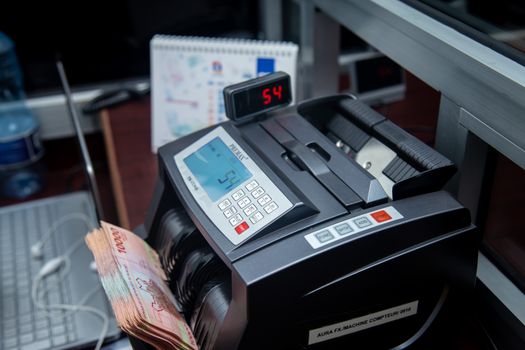
Multi-currency accounts create currency-timing risk that can cost 1.5–3% annually if not actively managed. This risk compounds for expats with expenses across multiple currencies, particularly those maintaining properties or obligations in several countries.
Currency timing example: An American retiree in Portugal with €30,000 annual expenses faces timing risk on EUR/USD conversion. Converting all funds during EUR strength (1.15 USD/EUR) versus weakness (1.05 USD/EUR) creates a $2,600 annual swing on the same expense base.
Risk mitigation strategies:
- Dollar-cost averaging: Convert currencies systematically rather than in lump sums
- Natural hedging: Match currency exposure to expense patterns (maintain EUR for European expenses, USD for US obligations)
- Forward contracts: Lock exchange rates for large, predictable expenses (available through OFX and Currencies Direct)
Multi-currency accounts work best for expats with genuine multi-currency expense patterns. Single-destination expats often achieve lower costs and complexity through targeted currency conversion rather than maintaining multiple currency balances.
Decision framework: Choose multi-currency management if you regularly spend in 2+ currencies representing more than 20% each of annual expenses. Otherwise, optimize for your primary destination currency with periodic conversion from USD base.
Your Banking Timeline: From Decision to First Transfer

Weeks 1–2: Documentation and Strategy
- Gather required documents: passport, visa, proof of address, income verification
- Select primary account type based on profile matching above
- Research destination-country banking requirements if planning dual-account strategy
- Verify current bank's expat policies and fee schedules
Weeks 3–4: Account Opening
- Submit applications for selected accounts
- Digital platforms: expect 24–72 hours for approval
- Traditional banks: allow 7–14 days for processing
- International banks: budget 10–21 days including compliance review
- Maintain existing accounts during transition period
Weeks 5–6: Account Funding and Testing
- Fund new accounts with test transfers ($500–1,000)
- Verify international transfer capabilities
- Test debit card functionality in destination country
- Confirm online platform accessibility from your target location
Weeks 7–8: Full Migration and Optimization
- Redirect recurring deposits (Social Security, pensions, investment income)
- Update automatic payments for US obligations
- Establish systematic currency conversion schedules if applicable
- Document new account information for tax preparation
Common delays: Visa verification for international banks (add 1–2 weeks), compliance review for high-balance transfers (3–5 business days), international mail delivery for cards and documents (7–14 days depending on destination).
Integration with Visa, Tax Residency, and Healthcare
Banking choices rarely influence visa eligibility, but account management can affect broader expat planning. Understanding these connections prevents complications during immigration processes and healthcare enrollment.
Visa considerations: Most countries don't specify banking requirements for retirement or investment visas, but proof of funds typically requires bank statements. Maintaining accounts at recognized international institutions can simplify documentation for visa renewals and resident status applications.
Tax residency implications: Account location doesn't determine tax residency, but address changes for banking purposes should align with tax planning strategy. Updating US bank addresses to foreign locations may trigger additional compliance reviews and affect automated systems for IRS correspondence.
Medicare and Social Security verification: Traditional US banks facilitate address verification for Medicare enrollment and Social Security administration. Digital-only platforms may complicate correspondence and automatic payment systems, requiring additional documentation for healthcare provider verification.
Healthcare provider integration: Some US healthcare providers require US-based banking for automatic payments and billing. Expats maintaining US healthcare coverage should verify payment acceptance before closing traditional US accounts entirely.
The optimal banking strategy integrates with your broader expat timeline rather than optimizing banking in isolation. Account choices made today should support your visa, tax, and healthcare objectives over the next 5–10 years of international living.
Frequently Asked Questions
Do I need to close my US bank accounts when moving abroad?
No, and closing US accounts often creates more problems than it solves. Most expats benefit from maintaining at least one US checking account for domestic obligations (taxes, subscriptions, healthcare) while adding international banking capabilities. Focus on optimizing your banking network rather than replacement.
Which banks are most expat-friendly for US citizens living abroad?
Charles Schwab, Fidelity, and USAA (for military) remain the most accommodating traditional US banks for expats. Among digital platforms, Wise and Mercury offer the best combination of features and expat support. Expat Countdown tracks approval rates and policy changes across all major providers to help you choose the right fit.
How do multicurrency accounts affect my US tax obligations?
Multicurrency accounts don't reduce US tax obligations. All foreign accounts exceeding $10,000 aggregate balance require FBAR reporting, regardless of account type or currency. The advantage of multicurrency accounts is operational efficiency and cost savings, not tax reduction.
Can I open a US bank account while already living abroad?
Yes, but approval requirements vary significantly by bank and your visa status. Digital platforms like Mercury and Wise approve international applicants within 24–72 hours. Traditional banks typically require existing customer relationships or significant minimum balances ($50,000+) for new expat accounts. Plan for longer timelines and additional documentation when opening accounts from abroad.
Related reading:
- Banking Abroad: Why Your US Bank Account Sabotages Expat Plans
- Banking While Abroad: Keeping Your US Accounts Open as an Expat
- Banking Abroad Without a US Address: Expat Account Setup
Planning your move abroad? Get weekly insider tips on visas, costs, healthcare, and daily life.