Last Updated: 2026-05-28
HSBC's latest reporting shows a 23% increase in US citizen account openings across their international network in 2025, driven by Americans seeking banking solutions that comply with FATCA while providing multi-currency access abroad. For US citizens planning international relocation, expat banking requires navigating a complex landscape where most traditional banks have exited the American customer market, leaving a select few institutions willing to manage the regulatory burden.
The banking infrastructure you establish abroad determines whether your international transition succeeds or becomes a financial nightmare. Unlike domestic banking, where switching accounts takes days, changing banks mid-relocation can freeze access to funds for weeks while you're establishing residency, managing currency conversion, and handling ongoing US tax obligations from overseas.
The FATCA Reality: Why Most Banks Won't Accept American Expats

Not sure where to start? Take the 2-minute relocation quiz and get a personalized country shortlist based on your budget, lifestyle, and visa eligibility.
The Foreign Account Tax Compliance Act fundamentally reshaped international banking for US citizens. Since 2014, foreign financial institutions must report American account holders to the IRS or face significant penalties when conducting business in US markets. This reporting burden—requiring detailed documentation on account balances, transactions, and beneficial ownership—costs banks an estimated $3,000–8,000 annually per US citizen customer.
The result: systematic closure of American expat accounts across Europe, Asia, and Latin America. Major institutions including Barclays UK, Deutsche Bank retail divisions, and most Swiss cantonal banks have completely exited the US person market. Even some offshore banking centers that traditionally served American expats have tightened eligibility requirements.
Which Banks Still Accept US Citizens
A shrinking roster of institutions continues serving American expats in 2026:
Global Options:
- HSBC International (most countries with HSBC presence)
- Citibank International (limited to premium clients)
- Deutsche Bank International Private Bank (€500,000+ minimum)
Regional Specialists:
- Banco Santander (Spain, Portugal, select Latin American markets)
- Bangkok Bank (Thailand, specialized US person desk)
- BDO and BPI (Philippines, with proper documentation)
Digital-First Solutions:
- Wise (formerly TransferWise) multi-currency accounts
- Revolut Business accounts (personal accounts restricted for US persons)
The key distinction: institutions still serving Americans have built FATCA compliance into their operational costs rather than viewing it as an add-on burden.
Ready to explore your banking options by country? Take our free relocation quiz to get personalized banking recommendations for your target destination.
Multi-Currency Accounts: Managing Real Currency Risk

Expat banking requires understanding currency exposure beyond simple exchange rate fluctuations. Americans living internationally face three distinct currency risks: transaction costs, timing risk, and emergency liquidity needs.
Transaction Cost Analysis
A US retiree receiving $4,000 monthly Social Security to a Portuguese bank account faces these real costs:
Traditional Wire Transfer Route:
- Wire fee: $25–45 per transfer
- Exchange rate markup: 2–4% below mid-market rate
- Receiving bank fee: €15–25
- Total monthly cost: $140–220 (3.5–5.5% of transfer)
HSBC Multi-Currency Account:
- Receive USD, convert to EUR when favorable
- Exchange rate markup: 0.5–1.5% below mid-market
- Internal transfer fee: €5–10
- Total monthly cost: $45–85 (1.1–2.1% of transfer)
The annual savings range from $1,140–1,620—meaningful for retirees on fixed incomes managing healthcare costs and inflation abroad.
Currency Timing Strategies
Multi-currency accounts allow tactical currency management without speculation. When the USD strengthens 5–8% against the EUR (as occurred in late 2025), expatriates can convert larger amounts to local currency for 3–6 months of expenses. Conversely, during USD weakness, maintaining larger USD balances provides natural hedging.
This is operational risk management for people whose income arrives in USD but expenses occur in EUR, PHP, or MXN—not day-trading.
US Tax Compliance: Expanded Requirements Abroad
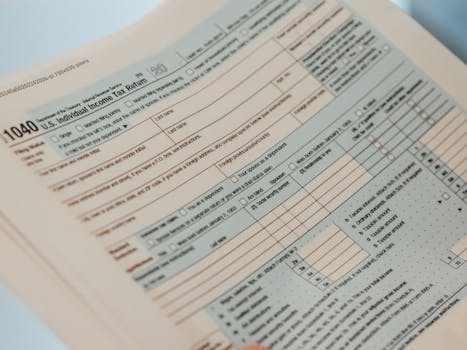
Moving abroad doesn't eliminate US tax obligations; it expands them. Every US citizen with foreign bank accounts exceeding $10,000 combined balance must file FinCEN Form 114 (FBAR) annually. Additionally, Form 8938 (FATCA) applies to higher thresholds: $200,000 for single expats, $400,000 for married couples.
HSBC's FATCA Integration
HSBC has invested significantly in FATCA compliance infrastructure. Their systems automatically generate the tax reporting documents US citizens need for IRS filing, including:
- Year-end account balance statements in USD
- Monthly high-balance tracking for FBAR compliance
- Form 1099-INT equivalent for interest earned
- Cost basis tracking for investment accounts
This integration reduces the administrative burden on expatriates, who otherwise must manually track balances across multiple institutions and currencies.
Penalties for Non-Compliance
FBAR violations carry penalties up to $12,921 per account per year for non-willful violations, or 50% of account balance for willful violations. FATCA penalties start at $10,000 per form. The IRS collected $1.2 billion in FATCA-related penalties in 2025, demonstrating the seriousness of compliance.
Working with banks that understand US reporting requirements reduces audit risk and ensures proper documentation exists if questions arise.
Country-Specific Banking Considerations

Banking accessibility varies dramatically by country and residency status. Expat banking requires matching institution capabilities to local regulatory environments and practical access needs.
Portugal and Spain: EU Banking Integration
Portugal's D7 visa holders can access HSBC Portugal accounts with €3,000 minimum balances. Spanish temporary residence permits qualify for HSBC Spain accounts with €6,000 minimums. Both offer EUR-denominated accounts with USD sub-accounts for Social Security deposits.
Local alternatives include Banco Santander, which has dedicated American expat services in Madrid and Lisbon. Millennium BCP in Portugal offers English-language support but requires higher minimum balances for non-EU citizens.
Mexico: Mixed Accessibility
HSBC Mexico serves American expats in major cities including Mexico City, Guadalajara, and Monterrey. Minimum balances range from $25,000 MXN ($1,400 USD) for basic accounts to $100,000 MXN for premier services. However, HSBC presence is limited in popular expat destinations like Playa del Carmen and San Miguel de Allende.
Banco Azteca and BBVA Mexico offer more widespread branch networks but with limited English-language support and higher fees for international transfers.
Thailand: Premium Banking Requirements
HSBC Thailand requires 500,000 THB ($14,000 USD) minimum balances for American expats without local employment. Bangkok Bank offers specialized services for US Social Security recipients through their New York branch, facilitating direct deposit arrangements that bypass international wire fees.
Thai banks generally require work permits or retirement visas for account opening. Tourist visa holders face significant restrictions, making HSBC's international network valuable for short-term stays while establishing longer-term residency.
Philippines: Local Bank Advantages
While HSBC operates in the Philippines, local institutions including BDO and BPI often provide better service for American expats. The Philippines' historical ties to the US mean these banks understand Social Security direct deposit, VA benefit payments, and US tax reporting requirements.
Minimum balances are significantly lower—PHP 10,000 ($175) for basic accounts—but international wire capabilities are limited compared to HSBC's global network.
Emergency Access and Crisis Scenarios
International banking requires considering scenarios beyond normal operations. Currency crises, political instability, and natural disasters can disrupt local banking systems, making account diversification essential for long-term expatriates.
Historical Precedents
Americans in Argentina during the 2023 currency crisis who held USD-denominated accounts maintained purchasing power while local peso accounts lost 40% value within months. Expatriates in Turkey during the 2018 lira crisis avoided massive losses through multi-currency positioning.
HSBC's global network proved valuable during COVID-19 lockdowns when many regional banks restricted international transfers or imposed currency controls. The ability to access accounts through multiple country platforms provided operational continuity.
Digital Infrastructure Resilience
HSBC's 2026 digital platform includes offline transaction capabilities and multi-region data backup. Their mobile app functions across countries without requiring local phone numbers—important for expatriates traveling between residences or during emergencies.
Smaller regional banks and fintech solutions often lack this infrastructure redundancy, creating single points of failure during crises.
HSBC's 2026 Service Updates and Competitive Position

HSBC has significantly upgraded their expat banking services in response to increased American relocation demand. New features introduced in 2025–2026 include:
Enhanced Digital Capabilities
- Real-time currency conversion with rate locking for up to 72 hours
- Integrated tax document generation for FBAR and FATCA compliance
- Multi-country account management through single mobile platform
- Automated Social Security direct deposit setup for 15 countries
Reduced Minimums for Target Markets
Recognizing increased competition, HSBC has lowered minimum balances in key American expat destinations:
- Portugal: €3,000 (reduced from €5,000)
- Spain: €6,000 (reduced from €10,000)
- Mexico: $25,000 MXN (reduced from $50,000 MXN)
- Philippines: $5,000 USD equivalent (unchanged)
Fee Structure Transparency
HSBC now provides all-inclusive pricing for international transfers, eliminating hidden correspondent bank fees. EUR to USD conversions carry a 0.75% margin above mid-market rates—competitive with Wise for transfers above $5,000.
Compare banking options for your target country with our Explorer plan — detailed financial planning tools and country-specific banking guides for $5/month.
Alternative Banking Strategies
While HSBC provides comprehensive services, alternative approaches may suit specific circumstances:
Wise Business Accounts
Wise multi-currency accounts offer lower fees than traditional banks but lack physical branches and comprehensive FATCA integration. Best suited for remote workers with irregular income rather than retirees needing consistent Social Security processing.
Local Bank Plus US Institution Combination
Some expatriates maintain both US-based accounts (for Social Security, investment management) and local accounts (for daily expenses). This approach works well in countries with limited international banking options but requires careful coordination for tax reporting.
Regional Banking Networks
Banco Santander's presence across Spain, Portugal, Mexico, and parts of South America provides single-institution coverage for expatriates considering multiple countries. However, their US person services vary significantly by country.
Expat banking in 2026 requires balancing regulatory compliance, operational efficiency, and crisis resilience. HSBC's expanded services address most American expat needs, but country-specific factors and individual circumstances determine optimal strategies.
The banking infrastructure you establish abroad becomes the foundation for successful international living—from managing currency exposure and reducing transaction costs to ensuring compliance with expanding US tax obligations. Choose institutions with proven track records serving American expatriates rather than chasing promotional rates or fintech innovations that may not withstand regulatory scrutiny or economic stress.
Your banking decision made today shapes your financial flexibility for years abroad. Approach it with the same deliberation you'd apply to visa selection or healthcare planning. In international living, reliable operations outweigh innovation appeal.
Frequently Asked Questions
What documents do I need to open an HSBC account as a US citizen abroad?
You'll need your US passport, proof of foreign residence (lease agreement or utility bill), Social Security number, and evidence of income source (Social Security statement, employment letter, or pension documentation). HSBC also requires completing W-9 forms for IRS reporting compliance. Processing typically takes 4-6 weeks in 2026.
Can I receive Social Security directly into foreign HSBC accounts?
Yes, HSBC accounts in most countries qualify for Social Security direct deposit through the Treasury's international payment system. You'll need to provide SWIFT codes and account details to the Social Security Administration. Expat Countdown's banking guides include specific setup instructions for each country.
Are HSBC international accounts protected by deposit insurance?
Protection varies by country where the account is held. HSBC UK accounts receive FSCS protection up to £85,000, while HSBC Hong Kong accounts have Hong Kong Deposit Protection Scheme coverage up to HK$500,000. US FDIC insurance doesn't apply to foreign branches, making institution stability crucial for large balances.
What happens to my HSBC account if I change residency countries?
HSBC's global network allows account transfers between countries, but you must meet new local requirements including minimum balances and documentation. Some expatriates maintain accounts in multiple HSBC jurisdictions to preserve access during transitions. Account closure and reopening may be required in certain cases, particularly when moving between significantly different regulatory environments.
Related reading:
- Banking Abroad: Why Your US Bank Account Sabotages Expat Plans
- Updated for 2026-05-24: Best Multicurrency Bank Accounts For
- Banking Abroad Without a US Address: Expat Account Setup
Planning your move abroad? Get weekly insider tips on visas, costs, healthcare, and daily life.