Last Updated: 2026-06-03
The average American retiree spends $4,200 monthly in the US; the same lifestyle costs $1,800 in Thailand and $2,400 in Portugal. Yet retirees who relocate cite social isolation, not money, as their top regret within two years. The best countries for low-cost retirement aren't necessarily the cheapest—they're the ones where older Americans can build sustainable communities while maintaining healthcare access and visa stability.
At 58, Michael left Arizona for Chiang Mai expecting financial freedom. He got it—monthly expenses dropped from $3,800 to $1,500—but spent his first year isolated in a modern condo, video-calling grandchildren at 2 AM. His story illustrates why cost-focused retirement guides miss the complete picture: successful expat living for older Americans requires balancing financial advantage with quality-of-life factors that become more critical with age.
Find Your Ideal Country in 2 Minutes
Answer a few questions and get personalized country matches based on your budget, visa eligibility, and lifestyle.
Start the Free Quiz →Cost Alone Isn't Enough: The Hidden Math of Retirement Abroad

Geographic arbitrage looks compelling on paper, but the mathematics change significantly for Americans over 55. While a 35-year-old remote worker might save $2,000 monthly in Thailand, a 62-year-old retiree faces additional costs that erode those savings: international health insurance ($400–800 monthly), flights home twice yearly ($2,400), and private healthcare for specialized treatments that local systems don't provide.
In Thailand, comprehensive expat health insurance through Cigna Global runs $600–900 monthly for Americans over 60. Annual flights to visit family add $1,200–2,400 yearly. That $2,600 monthly savings shrinks to $1,200–1,400 when accounting for retiree-specific costs.
Countries with stronger healthcare integration reduce these hidden expenses. Portugal allows Americans to access the public healthcare system through residency, significantly lowering insurance premiums. Spain offers similar benefits, while Mexico's proximity reduces family visit costs to $400–600 per round trip.
Pure cost-of-living rankings don't reflect the total expense picture for older expats. Healthcare accessibility, family proximity, and insurance availability create a more complete financial equation.
Ready to build your relocation timeline? Take our free quiz to discover which countries align with your budget, healthcare needs, and lifestyle priorities. Start the quiz →
Healthcare and Visa Stability Matter More Than Bargain Prices
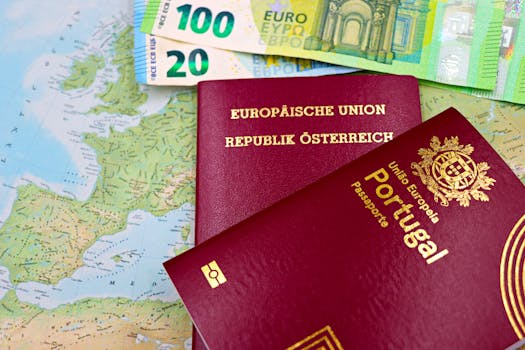
Healthcare quality and visa security trump low costs when planning retirement abroad. The most successful older expats prioritize countries offering both medical infrastructure and long-term residency stability, even at higher monthly costs.
Healthcare Infrastructure
Portugal and Spain rank high because their healthcare systems accommodate English-speaking patients through established expat programs. Portuguese public hospitals in Lisbon and Porto employ English-speaking staff, while private facilities like Hospital da Luz offer international patient services. The D7 visa provides access to Portugal's healthcare system within months of residency approval.
Thailand offers excellent medical care through institutions like Bumrungrad Hospital in Bangkok, but operates primarily as a medical tourism destination. Long-term healthcare relationships—critical for managing chronic conditions—prove more challenging without permanent residency status.
Mexico presents a middle path: cities like Puerto Vallarta and San Miguel de Allende have developed English-language medical practices serving American retirees, while IMSS (Mexican Social Security) coverage becomes available through temporary resident visas.
Visa Pathway Comparison
Residency security matters more for retirees than working-age expats. Portugal's D7 visa requires demonstrating €1,280 monthly income and provides a clear path to permanent residency in five years. Spain's Non-Lucrative Visa demands higher financial proof (€26,000 annually) but offers similar stability.
Thailand's retirement visa requires annual renewal with proof of 800,000 baht ($22,000) in a Thai bank account—manageable financially but administratively intensive for retirees preferring stability. The Philippines' SRRV (Special Resident Retiree's Visa) provides more security through a one-time $50,000 deposit that functions as both visa fee and local investment.
Social Integration: The Silent Success Factor

Social isolation destroys more expat retirements than financial miscalculation. Americans over 55 report depression and repatriation at higher rates in countries lacking established English-speaking communities.
The challenge isn't language barriers alone—it's the absence of shared cultural references and life experiences that develop into genuine friendships. Younger expats connect through co-working spaces or nightlife; retirees need different entry points: hobby clubs, volunteer organizations, religious communities, or structured expat groups.
Portugal's Silver Coast region has developed retirement communities where Americans engage in familiar activities—book clubs, hiking groups, wine tastings—while gradually learning Portuguese. This infrastructure exists because enough expats created demand for English-language services, international grocery stores, and cultural events.
Mexico's Lake Chapala area and Costa Rica's Central Valley offer similar advantages. These locations have established expat newspapers, English-speaking real estate agents, international banking relationships, and American-style healthcare practices.
Contrast this with rural Thailand or remote parts of Colombia, where costs drop dramatically but social infrastructure disappears. The key insight: successful retirement abroad requires existing communities of people in similar life stages, not just economic advantages.
Three Budget Scenarios for Older Expats

Real-world retirement budgets vary significantly based on age, health status, and family obligations.
Remote Worker (Ages 45–55)
Portugal: $2,800 monthly
- Rent (2-bedroom Lisbon suburbs): $1,200
- Health insurance: $300
- Food/utilities/transport: $800
- Entertainment/travel: $500
Mexico (Puerto Vallarta): $2,200 monthly
- Rent (2-bedroom near beach): $900
- Health insurance: $200
- Food/utilities/transport: $600
- Entertainment/travel: $500
Thailand (Chiang Mai): $1,900 monthly
- Rent (modern 2-bedroom): $600
- Health insurance: $400
- Food/utilities/transport: $500
- Entertainment/travel: $400
Early Retiree (Ages 55–65)
Add family visit costs and higher healthcare needs:
- Portugal: $3,400 monthly
- Mexico: $2,700 monthly
- Thailand: $2,600 monthly
Traditional Retiree (Ages 65+)
Include comprehensive health coverage and assisted living considerations:
- Portugal: $3,800 monthly
- Mexico: $3,100 monthly
- Thailand: $3,200 monthly
Notice how cost advantages compress with age. Thailand's appeal diminishes significantly for older retirees, while Portugal's higher base costs are offset by healthcare system access and family proximity.
Explore detailed country comparisons: Our Explorer plan provides monthly budget breakdowns, visa timelines, and healthcare guides for 30+ countries. Start your 7-day trial →
Planning Your Retirement Abroad Strategy

The best countries for low-cost retirement balance financial advantages with quality-of-life factors that matter more over time. Pure cost arbitrage works for short-term stays or younger expats; sustainable retirement abroad requires healthcare accessibility, social infrastructure, and visa stability.
Start by identifying your non-negotiable requirements: proximity to family, English-language healthcare, existing expat communities, or specific climate preferences. Then evaluate countries meeting those criteria for financial viability rather than choosing the cheapest option.
Portugal, Spain, Mexico, and parts of Costa Rica consistently rank high because they've developed infrastructure supporting American retirees. The goal isn't finding the lowest possible cost of living; it's finding the best value proposition for your specific retirement vision.
Frequently Asked Questions

What's the minimum Social Security income needed to retire abroad? Most retirement visa programs require $1,500–2,500 monthly income proof. Portugal's D7 visa needs €1,280 monthly, Mexico's temporary resident visa requires $2,500, while Thailand's retirement visa demands showing $22,000 in savings annually.
How long does it take to get permanent residency in popular retirement countries? Portugal offers permanent residency after five years on a D7 visa. Spain follows similar timelines through its Non-Lucrative Visa. Mexico provides permanent residency after four years as a temporary resident. Thailand doesn't offer permanent residency through its retirement visa, requiring annual renewals instead.
Can I use Medicare abroad? Medicare doesn't cover healthcare outside the US except in very limited emergency situations. Most American retirees abroad purchase international health insurance ($300–800 monthly) or rely on local healthcare systems through residency programs.
Which countries have the best English-language healthcare for American retirees? Portugal, Spain, and Mexico lead in English-language healthcare accessibility. Thailand offers excellent medical facilities but requires more research for ongoing care relationships. Costa Rica and Panama have developed strong healthcare infrastructure serving American expat communities.
Related reading:
- Updated for 2026-05-26: 8 Best Countries Where Expats Can Enjoy
- Updated for 2026-05-24: 4 Best Asian Destinations for Affordable
- Updated for 2026-05-28: Best expat health insurance for
Get the weekly expat brief
Country updates, visa changes, and cost-of-living shifts — straight to your inbox.
No spam. Unsubscribe anytime.